
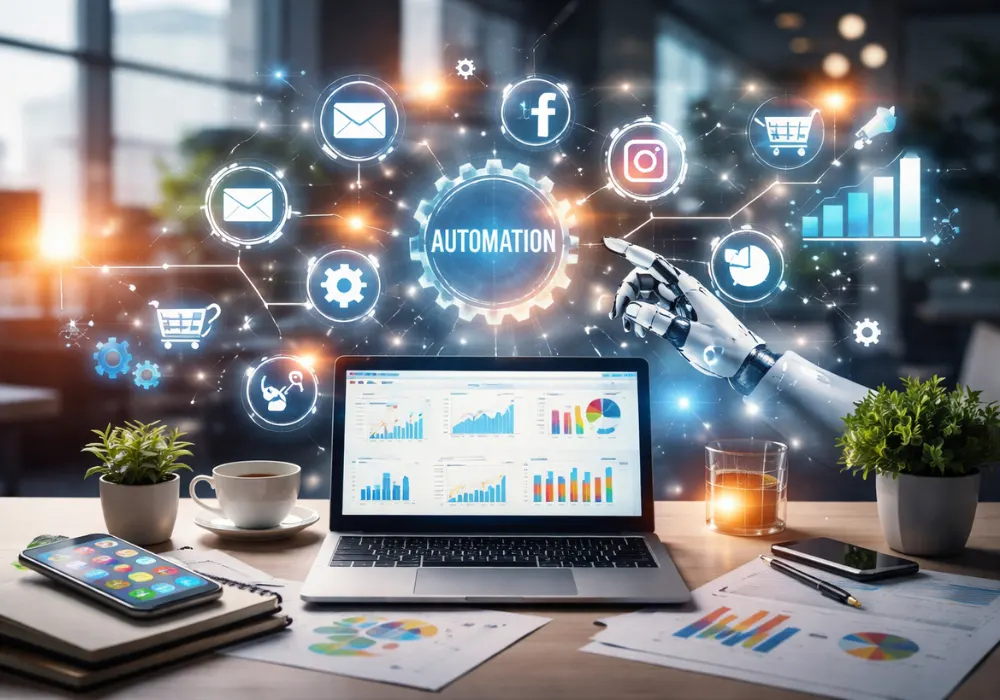
Staying ahead in the fast-paced world of digital marketing frequently seems like an impossible race. Even the most committed teams might become overwhelmed by the sheer amount of channels, data, and the ongoing need for timely, personalised engagement. However, what if there was a way to make this complicated terrain not only doable but also very effective and efficient? Automation is the game-changer that is radically changing internet marketing, not merely optimising it.
Gone are the days when digital promotion was a manual grind of scheduling posts, sending mass emails, and painstakingly analyzing spreadsheets. Today, automation isn’t just about saving time; it’s about elevating strategy, enhancing customer experiences, and achieving unprecedented levels of personalization and ROI.
Why Behind the Shift: The Limits of Manual
Before automation became ubiquitous, marketers grappled with several significant challenges:
Time-Consuming Repetition: Tasks like social media scheduling, email follow-ups, and data entry were incredibly repetitive and ate up valuable time.
Lack of Personalization at Scale: Delivering tailored messages to thousands (or millions) of individuals was virtually impossible manually.
Data Overload: Interpreting vast amounts of performance data across multiple platforms was a Herculean task, often leading to delayed insights.
Human Error: Manual processes are prone to mistakes, from typos to incorrect targeting.
Missed Opportunities: Reacting in real-time to customer behavior or market shifts was difficult, leading to lost leads and engagement.
Automation addresses these pain points head-on, freeing up marketers to focus on creativity, strategy, and innovation rather than operational busywork.
Key Areas Where Automation is Making its Mark:
1. Hyper-Personalization at Scale:
- Email Marketing: Automated email sequences (welcome series, abandoned cart reminders, re-engagement campaigns) triggered by user behavior ensure the right message reaches the right person at the optimal time.
- Website Content: Dynamic content delivery automatically adjusts elements of a webpage based on visitor demographics, past behavior, or referral source.
- Chatbots: AI-powered chatbots provide instant, personalized support and answer FAQs, guiding users through the sales funnel 24/7.
2. Smarter Advertising & Optimization:
- Automated Bidding: Platforms like Google Ads use AI to automatically adjust bids in real-time, optimizing for conversions or clicks based on predefined goals and performance data.
- Dynamic Creative Optimization (DCO): Ads automatically adapt their images, headlines, and calls-to-action to different audience segments, maximizing relevance and engagement.
- Audience Segmentation: Automation tools can dynamically segment audiences based on hundreds of data points, ensuring highly targeted ad delivery across platforms.
3. Efficient Content Management & Distribution:
- Social Media Scheduling: Tools like Buffer or Hootsuite automate post scheduling across multiple platforms, ensuring consistent brand presence without manual daily effort.
- Content Curation: AI can help identify trending topics and relevant articles, streamlining the process of finding shareable content.
- Workflow Automation: Tools can automatically publish blog posts, distribute press releases, or share updates across various channels once approved.
4. Streamlined Lead Nurturing & CRM:
- Lead Scoring: Automation assigns scores to leads based on their interactions and demographics, helping sales teams prioritize the hottest prospects.
- CRM Integration: Connecting marketing automation with CRM systems ensures a seamless handover of qualified leads and a unified view of the customer journey.
- Automated Follow-ups: Beyond email, automation can trigger follow-up tasks for sales teams, ensuring no lead falls through the cracks.
The Bigger Picture: Beyond Efficiency
The impact of automation extends far beyond simply saving time. It leads to:
- Improved ROI: More targeted campaigns mean less wasted ad spend and higher conversion rates.
- Enhanced Customer Experience: Timely, relevant, and personalized interactions build stronger relationships and breed loyalty.
- Scalability: Businesses can manage larger volumes of campaigns and customer interactions without proportional increases in staffing.
- Deeper Insights: Automation tools process vast datasets, uncovering patterns and insights that would be impossible to identify manually, leading to more informed strategic decisions.
- Empowered Marketers: By offloading repetitive tasks, marketers can dedicate more time to creative thinking, high-level strategy, experimentation, and building compelling narratives.
In essence, automation has evolved from a nice-to-have to a critical imperative in digital promotion. It’s not about replacing human ingenuity, but augmenting it, enabling marketers to be more strategic, more responsive, and ultimately, more successful in connecting with their audiences in a deeply fragmented and competitive digital world. Embracing automation isn’t just about keeping up; it’s about leading the way.